
Designing a garden for your Atlanta or Decatur home is a rewarding process that combines creativity and functionality. However, starting the process requires careful planning to ensure your dream garden aligns with your vision, property specifics, and local regulations.
Below, we’ll outline the key factors you need to consider before starting your garden design. Use this guide as your roadmap to create a beautiful, functional outdoor space.
Understanding Your Property: Trees and Regulations
1. Know Your Trees and Their Critical Root Zones (CRZs)
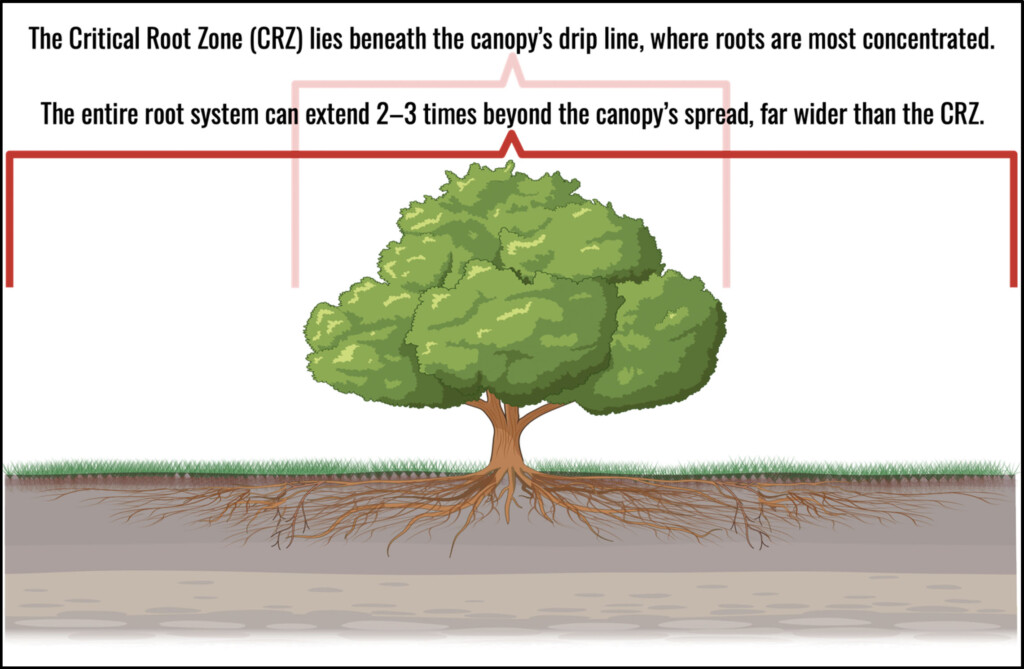
Created in BioRender by T. Deeb. https://fieldreport.caes.uga.edu/publications/B1590/the-partnership-between-trees-and-lawns/
The first step in designing your garden is assessing the existing trees on your property. Trees contribute to Atlanta’s renowned urban canopy, and their protection is essential. Begin by identifying your trees’ species and sizes, then calculate their Critical Root Zone (CRZ) to determine areas you should avoid disturbing.
Why This Matters: Disturbing CRZs during landscaping or construction can stress trees or lead to fines under local ordinances.
Read more about critical root zones.
2. Follow Local Tree Ordinances
The City of Atlanta and City of Decatur have regulations in place to protect their urban forest. Key points to keep in mind:
- A permit is required for activities near protected trees (trunk diameter of 6 inches or greater).
- Properties must meet minimum canopy coverage requirements:
- Residential lots: 45-60% of lot area or 35-40 inches of trunk DBH per acre, depending on zoning district.
Considering Stormwater Management
3. How Will Stormwater Impact Your Design?
Stormwater management is crucial in Atlanta’s heavy rainfall climate. Poor drainage can lead to erosion, pooling, or foundation damage.

During the design phase, ask:
- Are there areas prone to flooding on your property?
- Will adding patios or pathways increase runoff?
- Could rain gardens or bioswales solve drainage issues while enhancing beauty?
Explore how we integrate stormwater solutions into stunning garden designs. Schedule a consultation today.
Know Your Lot’s Numbers
4. Check Impervious Lot Coverage and Surveys

Impervious surfaces like patios and driveways are often limited by local codes. Consult your recent property survey to determine your current coverage and avoid exceeding allowable limits. If you don’t have a recent survey, we can help connect you with professionals.
5. Understand Building and Property Line Setbacks
Setback requirements dictate how close you can build to property lines. Knowing these restrictions is essential for placing features like outdoor kitchens, fire pits, or privacy hedges.
Designing for Privacy and Aesthetics
6. Do You Need Screening from Neighbors?
Privacy features can transform your yard into a tranquil retreat.

Options include:
- Evergreen hedges like Green Giant Arborvitae.
- Modern fencing paired with climbing plants.
- Layered plantings for a natural, multi-dimensional look.
7. Define Your Design Aesthetic
What inspires you? Collect photos of gardens and materials that match your vision. Your style might include:
- Modern simplicity: Clean lines, minimalist planting.
- A blend of old and new: Gardens that complement traditional architecture with contemporary touches.
- Wildlife-friendly spaces: Pollinator-friendly plantings or bird-friendly gardens.
Ready to start defining your aesthetic? Meet with our design experts.
Selecting Plants and Materials
8. Choose Plants That Reflect Your Goals
Do you love bright flowers, lush foliage, or clean modern plantings?

Consider:
- Native plants: Low-maintenance options that support Atlanta’s ecosystem.
- Bird-friendly designs: Plants like serviceberry or holly for habitat.
- Seasonal favorites like hydrangeas or sweetshrub for year-round interest.
9. Select Hardscape Materials

Hardscaping sets the tone for your garden. Popular materials include:
- Natural stone for timeless appeal.
- Corten steel for modern design.
- Concrete for durability and versatility.
- Gravel pathways for a rustic touch.
Practical Considerations
10. Consider Maintenance
Your maintenance level will depend on the plants and materials you choose.

Ask yourself:
- Do I prefer a low-maintenance design with drought-tolerant plants?
- Am I prepared to handle seasonal tasks like pruning and mulching?
- Will I need to hire professional maintenance services?
Need a design that fits your lifestyle? Contact us today to discuss low-maintenance options.
11. How Will Pets Use the Space?

If you have pets, factor their needs into your design:
- Are there paths or open areas for play?
- Are the plants pet-safe?
- Will you need specific waste management zones?
Budgeting and Planning
12. Understand the Investment
Garden design-build projects can be comparable to a kitchen remodel in terms of cost. Atlanta homeowners often budget $40,000 or more for comprehensive garden transformations. Setting a realistic budget ensures the design meets your expectations.
Curious about costs? Schedule a consultation to discuss your vision and budget.
Features to Enhance Your Garden
13. Outdoor Kitchens

Outdoor kitchens are perfect for entertaining in Atlanta’s mild climate. Features to consider:
- Built-in grills or pizza ovens.
- Durable countertops for food prep.
- Sheltered seating areas.
14. Fire Features
Fire pits or fireplaces add warmth and ambiance to your garden. Options include:
- Gas for easy use.
- Wood-burning for a traditional feel.
15. Lighting
Outdoor lighting enhances both safety and style. Consider:
- Pathway lighting for navigation.
- Spotlights to highlight architectural features or trees.
- String lights for a cozy atmosphere.
Final Steps: Bringing Your Vision to Life
- Schedule a Consultation: Work with professional designers to evaluate your site and goals.
- Gather Inspiration: Use photos, mood boards, Houzz or Pinterest to clarify your aesthetic.
- Check Regulations: Ensure your plans comply with tree ordinances, setbacks, and lot coverage limits.
- Set Priorities: Focus on features that matter most to you, like privacy, sustainability, or entertaining spaces.
- Plan for the Future: Choose designs and materials that will age beautifully and require manageable upkeep.
Designing a garden is an exciting opportunity to enhance your property and lifestyle. Whether you’re looking for modern simplicity or lush, native plantings, City Garden Company can guide you through the process from start to finish.
Contact us today to schedule your consultation and take the first step toward your dream garden!